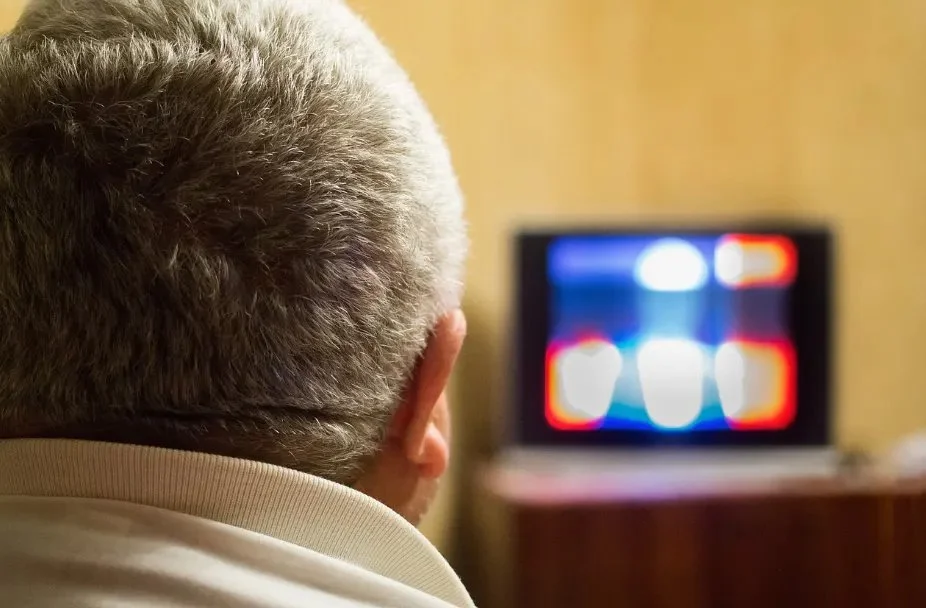
On a fairly regular basis, as I’m doing research related to my third third work, I encounter claims about older adults and television watching. These claims sometimes differ in what they assert and the evidence behind the assertions. So, I thought it would be worthwhile to dig into the research in an effort to understand the facts about TV watching among older people and the implications of these facts.
How much TV do older people in the U.S. watch?
I began by asking my speedy “research assistant” named ChatGPT this question. “Chat” responded quickly, as usual, pointing to data from the Bureau of Labor Statistics. Adults 65 years and older watch 4.23 hours of TV daily, more than any other age group. This data comes from 2018.
Chat pointed to more recent estimates, such as one in September 2024 from Nielsen, which had adults 65 and over watching 6.5 hours of TV daily. This includes both traditional TV watching and streaming. Similarly, an academic study from researchers at the University of Texas, Austin, found that “older adults spent approximately 37% of their waking time (6.4 hr a day) watching television.”
Bottom line: It’s like that older adults watch, on average, somewhere between 4 and 7 hours of TV each day. BTW, this means that the people who watch fewer hours are balanced by those who watch many more.
Does how much older people watch TV matter?
My grandparents on my mother’s side had full and busy lives for 80 years. Even in “retirement,” they always had projects going on at home, at church, and in the community. They would watch a couple of hours of TV in the evening, but that was about it.
Things changed when they were in their 80s, however. They faced a variety of physical limitations, which meant they mostly stayed home. Increasingly, they would watch TV during the afternoons in addition to the evenings. I expect they were hitting the 6.5 hour a day average near the end of their lives.
I always assumed that their television watching was a positive thing in their lives. It kept them entertained, informed, and even spiritually fed. (When they could no longer go to church, they watched several televised services each Sunday.) But now I’m inclined to think that they watched more television than was helpful for their physical and mental health.
My current inclination is based on academic research on the impact of excessive television watching on older adults. Here is a summary of some of that research:
“Too much TV might be bad for your brain”
Harvard Health Publishing, March 1, 2024
“Excessive TV-watching - defined as four or more hours daily - is associated with a greater risk of developing brain-based disorders such as dementia, depression, and Parkinson’s disease, a new analysis suggests.” The analysis mentioned in this sentence refers to the following research study.
“Different types of screen time, physical activity, and incident dementia, Parkinson’s disease, depression and multimorbidity status”
International Journal of Behavioral Nutrition and Physical Activity, Nov 2023
Based on a study of more than 400,000 participants from UK Biobank, this study found that “increased TV watching was associated with a higher risk of” dementia, Parkinson’s disease, and depression. A summary article from UCLA reports, “The higher TV use group had a 28% higher risk of dementia. They also had a 35% higher risk of depression and a 15% higher risk of Parkinson’s disease.”
“Television and computer use and dementia risk in older adults with limited leisure or social activities: A prospective cohort study”
Alzheimer’s & Dementia, March 8, 2026
This recent study found no risk for older adults who watched two or fewer hours of television per day, but a greater risk of dementia (including Alzheimer’s) for those who watched more than two hours daily.
That’s the bad news, which is consistent with earlier research. But this study also examined the impact of computer use on older adults. It found that those who used their computers regularly but less than two hours per day had “lower all-cause dementia risk.” Higher computer use was associated with a higher risk of dementia. What this study found about benefits of moderate computer use is consistent with the findings of the “Different Kinds of Screen Time” study noted above.
Why, we might wonder, would watching television for more than four hours each day be harmful to older adults? Researchers point to the rather obvious fact that watching TV is a sedentary activity. (The word “sedentary” comes from a Latin root meaning “to sit.”) If we’re watching TV, we’re not moving our bodies, except, I suppose, to get up for an occasional snack. TV watching is also not a relational activity, at least not most of the time. An exception would be cheering with your couch-sitting friends while watching the Super Bowl.
Computer use is also generally a sedentary activity. Yet moderate computer use seems to be good for our brains. Even better, it turns out, is “replacing 30 min/day computer using time with an equal amount of time of daily-life activity and structured exercise,” according to the “Different types of screen time” report. To my knowledge, this report did not consider the implications of using your smartphone while exercising. (When I go on my morning walk, I regularly pass an older man who is walking steadily while glued to his iPhone screen and seems surprised when I say “hello” to him. I’m using my phone to listen to Bible passages and devotional podcasts.)
It seems to me that what you do with your computer must make a difference when it comes to your brain. It’s not just the amount of time you spend looking at your computer screen. Of course, you can stream that same shows on your computer that you watch on TV. So “computer time” of this sort isn’t going to be cognitively beneficial. Also, I imagine that mindless scrolling through Instagram, TikTok, Snapchat, and similar apps isn’t going to help your brain very much. When I’ve done this, my mind feels rather numb. But if you’re using your computer for learning, thinking, relating, and otherwise challenging your brain, chances are you’re helping yourself out cognitively.
Bottom line: The average amount of TV watched by older people in the U.S. is not helpful to us. Those who watch less TV are better off mentally and physically. Moderate computer usage can be helpful to our brains, especially if we are engaged mentally and socially. No matter what we do with the screens in our lives, we need physical exercise. An overly sedentary lifestyle does not promote physical or cognitive health.